Showing posts with label Delaware. Show all posts

Friday, September 29, 2017

Does Your Cold Room or Chamber Need a Backup Cooling System? Part Three

cold storage room interior with shelving and fan coil unit
Creative cooling system designs, coupled with smart
controls, can improve cold room performance and reduce risk.
In Part One of this series, defining cold storage risk in quantifiable means was the major topic. Part Two illustrated that there are several operating schemes that can be employed to protect against mechanical failure in a cold storage facility, whether a reach-in cabinet or a building sized enclosure.

Effectively implementing a plan that reduces risk in cold storage facilities will require participants with more than just a familiarity with refrigeration system operation. Here is a list of some subjects of technical expertise that should be part of the solution.

  • Refrigeration system operation - This seems obvious, but what is needed is a somewhat more detailed knowledge of how refrigeration systems work. The expertise is useful for developing a hierarchy of all the potential failure scenarios, how to detect them and respond.
  • Refrigeration compressor failure - Risk reduction involves focusing on all the things that can go wrong. Not everyone is adept at doing this, but for the purposes of this project it is a useful skill. 
  • Sensing and measurement technology - Cold space temperature failure only occurs after mechanical failure. Relying on temperature as the only indication of failure overlooks the benefits derived from direct monitoring of equipment operation.
  • Control system complexity - Regulating and coordinating all the various facets of system operation is challenging when multiple cooling systems are involved. The control system must be capable of delivering proper cold space performance under a number of operating equipment scenarios. Two cooling systems could be active, or either of the single units in coordination with one another or alone.
The control system is the key to gaining the most advantage of any additional expense for backup refrigeration equipment. Monitoring equipment operation will enable early detection and alert for a number of indicators of impending or immediate equipment malfunction. Here is a short list of the essential performance parameters to monitor.
  • Room temperature - Obvious, with no explanation needed.
  • Refrigeration compressor motor current - This is easily and economically accomplished. It provides an indication of whether the compressor is operating in response to controller command, as well as key information about compressor performance.
  • Refrigerant discharge and suction pressure - This can be used to assess system performance in relation to an established baseline. Additionally, there are numerous opportunities to utilize discharge and suction pressure relationships as indicators of refrigeration system health.
  • Evaporator fan motor current - The fans that move air through the cold space are driven by one or more motors which are part of the equipment needed for expected performance. Motor health and performance can be determined using fan motor current.
There is plenty involved in deriving the maximum benefit from the additional cost for backup equipment. System control is easily accomplished with a properly programmed PLC. Understanding the interrelation of multiple systems operating on a single cold space is key to implementing a successful solution.

Share your cold storage concerns and challenges of any scale with equipment planning experts. Leverage your own knowledge and experience with their application expertise to develop an effective solution.

Wednesday, September 27, 2017

Does Your Cold Room or Chamber Need a Backup Cooling System? Part Two

laboratory controlled environment rooms for plant growth
The usage pattern of a cold space will determine how
best to reduce the risk from mechanical failure.
Image courtesy of Percival Scientific
In Part One of this series, what may define failure in cold room or refrigerator operation was discussed, giving the reader a starting point in evaluating whether to incorporate a backup refrigeration system into a cold space design. Operational failure can, and does, arise from countless sources. Some can be expected and anticipated, others not. Regardless of the source of failure, though, having a backup plan in place can help avoid damage to cold stored materials in all but the most catastrophic of events.
Once a decision is made to establish a contingency or backup plan, the form of the backup strategy needs to be addressed.
All backup strategies have a common goal of keeping the cold material cold. A simple clear goal, but with numerous ways it can be achieved, and each option may provide its own array of additional benefits or attributes which make it more suitable for a particular facility, budget, or other constraint.

"Twins" - An obvious backup cooling strategy is to provide a copy of whatever system is required for full range operation of the cold space. While this option offers an easy decision, it is likely to be one of the more costly ways to proceed. Proper design of a cooling system is based upon a load calculation that accounts for all the heat gain to which the cold space will be exposed. The sum of the loads will determine the size of the cooling system. Some applications that require close temperature control, or are subject to excessive door opening time, large warm mass additions, fresh air induction, dehumidifier operation, or a host of other heat sources could have comparatively large cooling systems. Purchasing and installing a full capacity redundant cooling system, in these cases, should be considered only when full operational capability of the space is the only option. When one system fails, the backup can maintain the space conditions without any change needed to the way in which the space is used.

Relocate - When the amount of stored material is manageable and a suitable space can be identified, it may be most effective to maintain unused cold space that is designated for use in the case of equipment failure. This likely will apply best to installations of refrigerated cabinets (refrigerators), where stored materials can be easily moved from the failing refrigerator to the backup space. The backup space should be kept in operation continuously, so its proper operation is confirmed. This backup scheme may be well suited to facilities with numerous refrigerated cabinets in use. The common backup cold space serves multiple users. A challenge specific to this plan is keeping the backup cold space from being used as normal cold space by any user for any number of reasons.

Full Load / Base Load - If a cold space is to have two cooling systems, an alternate to the "Twins" scheme can be considered. An analysis of space usage may reveal patterns that can be adjusted in case of a failure of the primary system. If a change in space usage can be enforced during periods when the primary cooling system is inoperable,  a smaller capacity, lower cost cooling unit can be incorporated as the backup unit. This option can impose some additional control challenges, but also some potential energy saving benefits, which will be discussed in the next installment.

Half Load / Full Load - If there are substantial lengths of time during which the cold space faces a low and stable heat load, another operating scheme may be considered for providing backup cooling. The full heat load component of the design is split evenly between two cooling units. One of the cooling units will be sufficient to maintain cold space temperature during most of the day, with the second unit available to provide additional capacity when needed. The second unit also serves as a backup in case the primary fails. This scheme will require adjustment to room usage in the case of failure, similar to that of the Full Load / Base Load plan previously described.

There are numerous other risk reduction schemes that can be developed to deal with the potential of cooling system mechanical failure. Some schemes may provide energy savings during normal operation, as well. A key element of real risk reduction and maximizing the benefit of the additional equipment cost lies in the control system. The controls need to be capable of detecting failure and taking appropriate action in response to a large matrix of possible conditions. The takeaway from this article is that there is more than one solution to the challenge. Approach the problem with an analysis of how the cold space is utilized, before selecting equipment. The subject can be more complex than it appears, especially to those unfamiliar with control systems. Enlist the help of experienced equipment specialists to help identify the risks, assess cold space usage, and develop an effective plan.

Saturday, September 16, 2017

Does Your Cold Room or Chamber Need a Backup Cooling System? Part One

cold room in laboratory facility
Laboratory Cold Room
The applications for refrigerated space are extensive and varied. Materials, products, and processes are housed in cold cabinets (refrigerators) and rooms because the stored contents will deteriorate or otherwise be rendered useless through exposure to elevated air temperature. Cold spaces have some sort of system or arrangement that maintains the interior temperature below that of the surrounding space. The continuous operation of that system is essential to keeping the space cold and protecting the stored material. There is risk of loss associated with the operation of the equipment. Properly evaluating the probability and extent of a loss due to equipment failure is a key element in determining whether to invest in a backup cooling system for a cold space. The first step in the evaluation process is to define what constitutes failure.

Define failure in quantitative terms.


In order to make good decisions about how to proceed, or even if you should proceed at all, it is useful to describe failure conditions in a way that can be put to use in designing a solution that reduces the risk associated with it. "The cold room is not cold" is an accurate, yet insufficient description of a failure condition. It sheds little light on what should be done with the mechanical or control systems to reduce risk. Stakeholders tend to think of performance and failure in terms of the product or process contained within the cold space. It is most useful to describe failure in terms of system operation or performance, since these items can be used to develop a workable design or plan to address the risk. Here are some suggestions of things that might be included in your description of failure.
  • Temperature Excursion - Define an unacceptable deviation from setpoint conditions in terms of time and temperature. For example, "Temperature five or more degrees above setpoint for greater than seven minutes." This description provides a quantified design target. Your concern may be stored material temperature, rather than cold space air temperature, but control systems are most likely to measure and regulate air temperature. Describing a temperature excursion in terms of air temperature is most useful.
  • Equipment Operation - Most cold space temperature excursions are preceded by an event involving equipment or component malfunction. Establishing a list of equipment performance requirements necessary for proper operation can be useful in evaluating how deeply you may want to pursue the  reduction of risk. A simple example, confirming the refrigeration machinery is operating in response to a controller command, can be used to reduce risk of temperature excursion because the machinery failure can be detected before the temperature excursion is evident. An in depth analysis of equipment operation can produce a stunningly large list of events that must occur for proper operation. Not all will be candidates for action.
  • Improper Operation - This category includes things that the user may do, or coincidental things that may happen, that negatively impact system operation and will lead to failure. Some examples include over or improper loading of the space, failure of building support systems or utilities, and allowing excessive infiltration of air from the surrounding space (leaving the door open). Once again, a careful examination will produce a large list of possibilities which must be pared down to a workable few that can deliver cost effective protection.
It will be effective to bring in a cold room or refrigerator specialist and make them part of your evaluation team. As you can probably see, there are some fairly technical issues involved once you get beyond a description of temperature excursion. A specialist can help bring the technical issues into focus and provide explanation of each that stakeholders can use to make informed decisions.

In the next post, I will cover some strategies for reducing risk for cold space stakeholders. Share your cold storage and process requirements and challenges with equipment experts, leveraging your own knowledge and experience with their expertise to develop effective solutions.

Friday, September 8, 2017

Full Featured Environmental Chamber Control System

environmental chamber control panel plant growth chamber control panel
The IntellusUltraConnect C9 adds a range of remote
connectivity functions to the operational functions of the
IntellusUltra C8.
Image courtesy Percival Scientific
Percival Scientific has a long history of designing and manufacturing environmental chambers and plant growth chambers for life science industries and institutions. Those years of experience are part of the IntellusUltra series of control units that serve as the user interface and operating unit of the company's line of environmental rooms and chambers.

Ease of use is the hallmark of the controllers. Some applications, especially those for plant studies, can require multi-step profiles that change temperature, humidity, lighting, and other functions. Entering or editing a profile with IntellusUltra is intuitive and simple.

In addition to a plethora of operational features, the "Connect C9" version offers a range of remote connectivity functions that can keep users in touch with their equipment and research anytime and anywhere. From the Percival Scientific website...
  • Remote connectivity and monitoring with e-mail notifications.
  • On-board USB connection allowing for real time data logging with up to four gigabytes of data storage. Simply use a portable USB stick to download your data to analyze on any other capable device.
  • An on-board Ethernet connection allows direct monitoring and analysis of chamber conditions.
  • Available remote monitoring software has been optimized to interface with the major web browsers.
  • Ability to upgrade to our cloud-based service securely and confidently monitor and backup your research data
Solid control of environmental parameters, plus connectivity that enables access to the system from anywhere. More detail is provided in the document included below. Share your environmental room and chamber plans and challenges with experienced lab equipment professionals, leveraging your own knowledge and experience with their product application expertise to develop effective solutions.


Friday, August 25, 2017

Laboratory Refrigerators Equipped for Specialized Applications

laboratory refrigerator configured for chromatography process glass doors electrical outlets wall ports
Laboratory refrigerators can be specifically configured
to match lab process work.
Image courtesy Powers Scientific
Refrigerated space in a laboratory is not the same as refrigerated food storage space. Yes, of course, both are cold. Laboratory needs, though, can range beyond simple cold storage. Lab cold space work is often an ongoing process that requires a cold environment. There may be application requirements that will not be accommodated by food service or simple cold storage units.

  • Temperature Control - Stored materials and processes in a lab cold space are likely to have a low tolerance for temperature excursions outside a comparatively narrow range. Higher performance controllers, and in some cases modified or specialty refrigeration systems, deliver the performance needed for these applications. 
  • Corrosion - The presence of some chemicals in a lab cold space requires accommodation with a chamber inner liner with adequate resistance to corrosion.
  • Instrumentation and Process Equipment - Lab processes can incorporate the use of equipment and instrumentation within the cold space. Heat generated by the equipment must be removed by the refrigerator cooling system in order to maintain control of temperature. These instruments operate with electric power which must be accessible within the chamber, via installed receptacles, or through capped ports in the cold space wall with an extension cable. The ports can also serve to provide a path for tubing or other instrumentation cables into the cold space from the surrounding lab.
  • Safety - Some chemicals and materials present flammability or explosion hazards when stored or placed in enclosed spaces. Special refrigerators are available that are specifically designed and built to meet the regulatory requirements for storing these hazardous materials.
  • Vibration - Certain processes may require the maintenance of low vibration transmission from the refrigerator cabinet and machinery to the housed process. This requires special attention to the mounting and structure of critical refrigerator machinery and interior supports.
Share your laboratory cold space requirements with a lab equipment expert, combining your own knowledge and experience with their equipment application expertise to develop an effective solution.

Tuesday, August 15, 2017

Keeping the Cool in Your Laboratory Refrigerator

sliding glass door laboratory refrigerator
A small amount of regular maintenance can
assure sustained performance of your lab refrigeration equipment
Image courtesy Powers Scientific
Hardly the highest tech piece of equipment in your lab, that refrigerator or freezer is nonetheless important to much of what goes on in the lab. The supplies or work in process stored in those refrigerated spaces represents precious time and budgeted funds. Knowing and doing a few simple things can keep refrigeration equipment operating smoothly, save energy, and head off costly repairs.

There are a number of different refrigerator configurations, so let me limit this brief explanation to something of a generic lab refrigerator, like that pictured above from Powers Scientific. Here are some basics.

  • Double sliding glass doors
  • Bottom mounted air cooled refrigeration system
  • +4 degree Celsius operating temperature

How does a refrigerator really work?


The refrigerator essentially consists of three things:

  • Insulated Cabinet - The cabinet is what you see, what you refer to as the refrigerator. It contains the stored materials. The cabinet also keeps the cold air from leaking out to the surrounding space and keeps the surrounding air from entering the contained area. The cabinet structure also provides a barrier of thermal resistance to heat transfer, or insulation.
  • Heat Transfer System - Also called the refrigeration system or cooling system, the heat transfer system takes heat from the air within the cabinet and expels, or transfers, it to some medium outside the cabinet. Most often, the medium outside the cabinet is the air in the lab, although it is possible to have a system that employs a liquid, such as water, in place of air. It is important to understand that an air cooled system delivers a net heat gain to the surrounding space. That rejected heat must be removed or otherwise dissipated to keep the space from overheating.
  • Controls - Unbridled operation of the cooling system will not deliver the predictable temperature performance needed for laboratory settings. A controller, in its most basic configuration, must be able to accurately measure the chamber temperature and regulate the operation of the cooling system in response to changes in that temperature.

What are some things to do, or be aware of, with refrigerator operation?

  • Doors - Doors are part of the cabinet containment that keeps cold air from escaping and warm air from entering. They should operate smoothly, without requiring undo force to open or close. When closed, the doors should set firmly against their sealing surfaces and any gaskets should be kept clean and free of dirt and grit that can inhibit sealing and lead to premature deterioration. A simple periodic inspection and wipe down with a wet cloth will go a long way toward maintaining good performance. Doors that creak or squeak when operated should be further examined for excessive hinge or bearing wear, possibly in need of lubrication.
  • Condenser - This is the device that ejects heat to the surrounding space on the example air cooled unit. On most refrigerators, the condenser will be located either on the top of the cabinet or in a compartment below the cabinet. To locate the condenser, look for louvers or a grille that permits air to flow to the condenser. It is important that air be able to flow freely across and through the condenser. If the fins on the condenser become clogged or blocked with dust, pieces of paper, tape, bags, plastic, or anything else that inhibits free air flow, the cooling capacity of the system will be reduced. Excessive blockage can cause the equipment to fail. A simple cleaning can be accomplished with a vacuum cleaner or a flow of compressed air. Even if you are not the person who will ultimately clean the condenser, it is important to know when to schedule the maintenance to be done.
  • Evaporator - Inside the refrigerator there will be a fan unit that also houses a finned evaporator. The chamber air flows across the evaporator surface and is cooled by evaporating refrigerant. Keep the air flow passage free of accumulated dust and debris that may block air movement through the fan housing and across the evaporator. Sometimes pieces of plastic film or paper can get loose in the refrigerator and be drawn into the inlet side of the evaporator, blocking some of the air flow. In most cases, it is just useful to inspect and recognize when service might be needed. 
  • Temperature - Over time, you will grow accustomed to normal refrigerator performance. Any long term excursion of chamber temperature outside of the expected performance range is cause for a service call. There is only one way that operation will be right, but a vast number of ways that it can go wrong. A short term, probably no more than one hour, temperature excursion out of range likely is the result of excessive heat load. The most common causes of this are large additions of warm mass to the chamber or excessive door opening time or frequency. Any temperature anomaly that lasts longer than about one hour is cause for diagnosis by a qualified technician.
A lab refrigerator is not a piece of equipment that garners close scrutiny by lab occupants. The best plan may be to have a qualified technician inspect the equipment on a regular basis. Inspections are generally inexpensive and can often be scheduled along with regular maintenance of other equipment in the lab. Share your questions and concerns about laboratory refrigeration applications for all temperatures and sizes with application experts. Combining your own on site knowledge and experience with their product application expertise will result in an effective solution.

Wednesday, August 9, 2017

Refrigerators for Laboratory Applications

laboratory refrigerators
Several different types of laboratory refrigerators
Image courtesy Powers Scientific
Many laboratories have a need for refrigerated space. The requirements for that space vary widely enough to support a very broad range of refrigerated cabinets, providing variants and optional features that meet every need. Refrigerators tend to last for a long time, so it's practical to make a considered decision when procuring one for the lab. Here are some items to include when selecting a new lab refrigerator.

  • Materials to be Stored: Certain flammable materials requiring cold storage must be kept in a refrigerator specifically designed and rated for the storage of those materials. Less hazardous materials can be accommodated by a wider variety of choices. 
  • Storage Temperature: Determine the most sensitive content for the proposed refrigerator. What are the highest and lowest temperatures providing suitable storage conditions? Lab refrigerators are generally not precision control chambers. Know the requirements of your contents and the capabilities of the refrigerator. Make sure they are compatible.
  • Controls and Monitoring: What are your needs for control, display, and monitoring of cabinet temperature? Is a dial thermometer a sufficient temperature indicator, or is a digital display more appropriate? There are many options available. Think about how temperature should be monitored and out of range occurrences handled. Keep in mind that electronic controls will not function during a power failure without a backup power source. Maintaining documentation of chamber temperature under all conditions may require inclusion of battery backup for data logging and alarm devices.
  • Cabinet Size: Lab refrigerators are available in sizes ranging from a few cubic feet to units as large as a grocery store display line. Take the time to make a layout of your storage needs, everything that will go in the refrigerator. This will help in determining the best size for your application. 
  • Doors: The refrigerator doors are the user interface for the unit. They are what you touch every time the refrigerator is accessed. Make sure the selected doors meet the application needs for interior visibility, security, and ease of access. Also take into account the space where the refrigerator will be installed. Sliding doors do not encroach on the surrounding space, as a hinged door would.
  • Heat Rejection: An often overlooked aspect of lab refrigerator operation is where the heat removed from the chamber interior will go. A refrigeration system is a heat transfer machine, taking heat from the chamber air and rejecting it from the condenser. The condenser is usually air cooled, resulting in that heat being released into the space where the refrigerator is installed. There must be an identified path for that rejected heat to be further transferred out of the installation space, otherwise the space will increase in temperature until the refrigeration unit fails. If an assessment of the proposed installation space for the refrigerator fails to identify sufficient ventilation, there are several refrigeration system schemes that can be substituted for the self-contained condenser most often seen on lab refrigerators.
  • Accessories: There are more available options and accessories for laboratory refrigerators than could be included here. Users should describe to potential vendors the manner in which the refrigerator will be used. Refrigerators employed as simple cold storage units will have a simple set of requirements. Those used as part of a process may have very special configuration requirements. 
  • Transit: Some lab refrigerators are quite large. Of course, you should measure the space where the unit is to be installed, making sure there is a fit. Do not forget to verify that the equipment must pass through all the doors, hallways, elevators, and other spaces that make up the path from delivery point to installation point.
There is much more detail that may be involved in making the best selection. Enlisting the assistance of a laboratory equipment specialist will help speed you through the selection process and create a successful purchase, delivery, and installation plan. 

Friday, July 28, 2017

Atlantic Technology Group Additional Services

presentation to stakeholders in laboratory project
We have written previously about the contribution of a technical sales representative and the added value he or she can bring to the purchase of a physical product. With a daunting array of potential product variants available, it can be difficult and time consuming to reach a knowledge level that enables a confident selection of laboratory equipment for a specialized application. The tech sales rep's knowledge of currently available products and their application virtues and limitations can speed the selection process and contribute to a positive outcome for all stakeholders.

At the company level, many technical representatives commit to bringing factory level training resources to their customers. Reading instruction manuals can often fail to instill real understanding about the application, use, and upkeep of complex laboratory gear. Plus, manuals provide only one way communication. Training conducted by experienced, knowledgeable, factory trained individuals can instill almost tangible levels of comprehension in operators, users, and supporters of laboratory and process equipment.

Field services, in the form of start-up, calibration, repair, or regular maintenance of instruments and equipment are also provided by many technical sales firms. Again, bringing to bear broad experience and factory level training, technical representatives can function as an efficient outsource or reference for essential tasks that may require special skills or knowledge. Repair, whether in-house or facilitated through the factory, is another way in which technical representatives leverage their experience and knowledge into offerings that bring value to their customer base.

Face it, if all that was needed was quick delivery of lab equipment, Amazon.com would be your primary supplier. These are sophisticated instruments, apparatus, and equipment, requiring skill, knowledge, and experience to assure proper selection, installation and operation. A good technical rep firm knows that its customers need more than a product in a box or crate. It's results that count, and Atlantic Technology Group is committed to assisting customers wherever ATG's expertise can help leverage positive outcomes for their customers.

Make Good Use of the Technical Sales Representative

industrial engineers specialists solving project challenges
When faced with a challenge on your project, get people
involved with expertise that you may lack.
Laboratory and process equipment are often sold with the support of sales engineers working for the local distributor or representative. Realizing what these specialists have to contribute, taking advantage of their knowledge and talent, will help save time and cost, contributing to a better project outcome.

Consider these contributions:

Product Knowledge: Sales engineers, by the nature of their job, are current on new products, their capabilities and their proper application. Unlike information available on the Web, sales engineers get advanced notice of product obsolescence and replacement. Also, because they are exposed to so many different types of applications and situations, sales engineers are a wealth of tacit knowledge that they readily share with their customers.

Experience: As a project engineer or leader, you may be treading on fresh ground regarding some aspects of your current assignment. You may not have a full grasp on how to handle a particular challenge presented by a project. Call in the local sales person - there can be real benefit in connecting to a source with past exposure to your current issue.

Access: Through a technical sales engineer, you may be able to look “behind the scenes” with a particular manufacturer and garner important information not publicly available. Sales reps deal with people, making connections between customers and manufacturer's support personnel who may not normally be public facing. They make it their business to know what’s going on with products, companies, and industries.

Of course, sales engineers will be biased. Any solutions proposed are likely to be based upon the products sold by the representative. But the best sales people will share the virtues of their products openly and honestly, and even admit when they don’t have the right product. This is where the discussion, consideration and evaluation of several solutions become part of achieving the best project outcome.

Whatever your stake in an upcoming or ongoing project, it's highly recommended you develop a professional, mutually beneficial relationship with a technical sales expert, a problem solver. Look at a relationship with the local sales engineer as symbiotic. Their success, and your success, go hand-in-hand.

Saturday, July 22, 2017

Modular Wall Systems as Barrier Wall in Wash Area

laboratory animal cage wash area clean side
Laboratory animal cage wash area, clean side.
Image courtesy Avant Garde Scientific
There are many instances in laboratory facilities and other industrial processing sites of a need for isolation between one phase of a process and another. In laboratory animal care facilities, there is a pronounced need for isolation of the entry side of cage, rack, and ware cleaning from the exit side.

The entry side is commonly called the dirty side, since items entering that area are destined to be cleaned. The exit side is known as the clean side. It is good practice to not only install a physical barrier between the two sides, but also to establish procedures to assure that personnel, carts, or other equipment does not transit from dirty to clean side without first being properly treated.

Barrier walls are architectural building features, but almost an integral part of the equipment installed in the cage washing area. The walls and machines must be properly mated to provide an impenetrable seal that disallows passage of fluids, even air and vapor, from the dirty side to the clean side. Accomplishing this requires a considerable degree of care in the coordination of cage washing or sterilizing equipment configuration and building features at the installation site. The role of the barrier wall is essentially to fill in all the gaps between the machinery and the building features, providing the positive seal and barrier that is needed.

Materials of construction for the barrier wall should accommodate the type of service and operation anticipated for the cage wash area. Gaskets, fasteners and surface materials need to withstand repeated exposure to cleaning and sanitizing agents that may be employed in the area. The surface of the wall, often stainless steel, as well as the supporting structure, needs to be of sufficient thickness and strength to withstand the inevitable impact of heavy wheeled carts or other potentially damaging items.

Cage wash areas, once completed, will be depended upon to provide continuous service for many years. The barrier wall should be specified, designed and installed with that timeline in mind. Share your laboratory animal cage washing challenges with process specialists, combining your own knowledge and experience with their product application expertise to develop an effective solution.

Friday, July 21, 2017

Esco IsoClean Pharmacy Isolators


Drug compounding at pharmacy facilities presents a potential source of contamination, as well as a hazard to the compounding technician as well. IsoClean Pharmacy Isolators provide a physical barrier between the compounding materials and the surrounding environment. Product and operator protection are maintained using one of several appropriate product configurations designed to accommodate the specific needs of compounding processes.

The video provides an overview of the various product configurations, how the they work to provide the appropriate protection for operations employing hazardous and non-hazardous materials. Share your operational requirements with an application expert for help in selecting the best product configuration for your application range.

Saturday, July 8, 2017

Activated Carbon in Water Purification

laboratory technician dispensing purified water
Activated carbon may be an essential part
of almost any water purification system.
Photo Courtesy of Elga Lab Water
Activated carbon is utilized as a processing or purification step in many water purification systems. It's effectiveness in removing a range of organic compounds from raw water supplies is well known.

Carbon, of course, is a very common earthly element. Activated carbon, also called activated charcoal, often uses charcoal as processing feedstock. Special processing produces a very porous material with a very large effective surface area. The expanded surface area increases the carbon's capacity for adsorption, the collecting of molecules, atoms, or ions on the surface layer of the activated carbon. Activated carbon excels at adsorbing a variety of organic compounds often found in raw or municipal water supplies.

Laboratory applications using purified water will generally include at least one step that targets the removal of organic impurities. Depending on the targeted final water quality, the size of the system, and several other factors, activated carbon may play an important role.

There are numerous water purification technologies in use throughout industrial, commercial, residential, and laboratory settings. Determining the best combination and implementation of these technologies to produce the desired water quality with high reliability and reasonable cost is the job of equipment application specialists. Share your water quality and usage requirements with them for effective solutions.


Wednesday, June 28, 2017

What Gets Laboratory Glassware Clean?

laboratory glassware
Directing the forces that get glassware clean to every surface
is the task of a laboratory glassware washing machine
As mentioned before in a previous posting...."Glassware washing, in the laboratory setting, is an unglamorous but necessary task. Glassware utilized at almost any point in an analytical procedure needs to come with an assurance that there is no residual material left over from any previous use. The operation, if accomplished manually, raises practical concerns about quality control and effective use of valuable human resources."
Understanding how a glassware washing machine cleans your glassware can help in obtaining the best results from machine use. 
Simply described, there are two main cleaning forces or actions at work during a wash program. Dissolution involves the solvent action of water, often aided by chemicals, on contaminates on the wash load. The second major cleaning component is mechanical removal of soils and contaminates, accomplished with impingement (blasting the dirt off with direct spray) and a cascading flow of wash or rinse water.

Looking at these two cleaning forces, there are some other factors that are related to their overall effectiveness.

  • Time - Longer cycle times will deliver higher overall levels of load exposure to cleaning forces.
  • Temperature - Some types of contaminates are best removed with high temperature wash fluid, others with at least part of the wash program using cooler temperature. 
  • Chemicals - The solvent power of the wash solution can be significantly enhanced by using the right chemical additive. Matching wash chemicals to the demands of the wash load is a key element in achieving good results in a reasonable amount of time.
  • Contact - Nothing listed above has any impact unless the wash program solution makes full and repeated contact with all surfaces of the load. 
What does all this mean to the lab operator or technician trying to get clean glassware?
It is necessary to know the nature of the soil or contaminates on the wash load. This allows the proper selection of temperature and chemicals for the wash program, and the program sequence. Separating soiled glassware into groups according to wash program is a useful procedure, matching the soil or contaminant with the right program, temperature, and chemicals to remove it.

Loading the washer is also an important step in the cleaning process. Operators should understand how wash fluid flows through the machine and any special processing carriers or racks. Improper loading can prevent sufficient contact between wash fluids and load surfaces, reducing the effectiveness of the wash program.

This is a very general description. Each topic covered has depth and detail that needs to be explored enough to determine an effective wash plan for your lab. Technical help and information is available from glassware manufacturers, wash chemical suppliers, and wash equipment specialists.

Sunday, June 25, 2017

Machine Washing of Laboratory Glassware

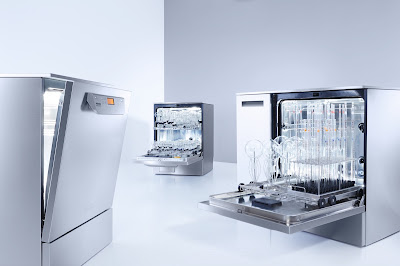
laboratory glassware washers showing loading racks and glassware
Laboratory glassware washers with loading racks and glassware
ready for processing
Courtesy Miele Professional
Automation and changes to many laboratory tasks and processes has likely reduced the need for reusable glassware in those tasks. Nevertheless, there remain many applications where laboratory glassware and other reusable items are the mainstay. Employing reusable containers, tools, and a host of other specialized items brings with it a responsibility for properly processing, or cleaning, the items after each use.
The goal of laboratory glassware washing is to remove all traces of the previous tasks in which the glassware was employed.
It's really that simple. Ideally, no traces of anything but glass. Laboratory measurements can be highly sensitive, so meeting the gold standard for clean glassware requires some knowledge and skill.
  • Know the nature of the contaminants on the glassware.
  • Know how to properly remove those contaminants.
  • Establish a procedure that, when properly executed, thoroughly removes the contaminants.
  • Execute the procedure in accordance with established steps.
Hand washing is one way to process reusable glassware, and in some special cases may be the best or only available way to accomplish the task. Here are some characteristics of glassware washing by hand.
  • Manual operation, completely accomplished with human labor.
  • All facets of cleaning operation subject to adjustment, intentionally or accidentally, by the washing technician.
  • Process one item at a time, resulting in substantial time commitment to the operation.
  • Air dry at room temperature, unless a separate oven is used.
  • Potentially, some limitation on exposure of washed items to high temperature water due to supply temperature irregularity or evaporative cooling.
  • Extensive handling of fragile glassware can lead to breakage.
  • Inventory of brushes, gloves, drying racks, and other items needed for processing must be maintained and replenished as needed.
  • Initial investment is low.
  • Personnel training component can be high, in cases where high quality work is needed and employee turnover may be a factor.
Glassware washing machines, specially purposed for processing laboratory glassware, can overcome a number of the efficiency and quality concerns that can be associated with manual washing. Here are some characteristics of automated glassware washers.
  • Initial investment is high when compared to manual washing.
  • All facets of the operation, except loading and unloading, are automated and require no human intervention under normal operation.
  • Capable washing equipment provides multiple stored programs with differing washing protocols needed for effectively processing various types of glassware or other items.
  • Controller runs and monitors the operation of the machine through selected cycle to assure the correct wash procedure is followed.
  • Process multiple items at a time.
  • Washing machines can include a heated drying cycle.
  • Water temperature is maintained at the proper level throughout the timed cycle phases.
  • Inventory of holders, supports, or racks for processing the glassware inventory of the lab.
  • Minimized use of human labor for the washing operation.
Each lab operation can choose between either the hand or machine washing methods. Share your lab glassware washing requirements and challenges with lab equipment professionals, combining your own experience and knowledge with their equipment application expertise to develop an effective solution.

Sunday, June 18, 2017

Rigid Sided Anaerobic Glove Boxes - Theory of Design

Rigid anaerobic chamber glove box with airlock
Rigid construction anaerobic glove box with airlock
Courtesy Coy Lab Products
There are numerous threads of scientific research that require small environments with extremely low levels of oxygen. This anaerobic environment requires isolation from the surrounding atmosphere and a means to scavenge trace amounts of oxygen that inevitably get into the closed environment. It is also, in many cases, necessary to provide a means to transfer materials into and out of the chamber during use, as well as to allow operators to manipulate materials within the chamber.

One method applied to remove infiltrated oxygen is through the use of a catalyst within the chamber to react the oxygen with hydrogen, producing water vapor. This can be accomplished with a small fan enclosure that continuously or intermittently circulates chamber air across a palladium chloride coated alumina substrate. The palladium chloride supports the oxygen-hydrogen reaction, while the alumina substrate serves to absorb the water vapor. The fan must be properly sized and operated on a schedule that will treat the chamber atmosphere at a rate that is suitable for the application. Larger fan and catalyst combinations will produce larger turnover rates for the chamber atmosphere, along with faster recovery of anaerobic conditions.

For the movement of materials into and out of the work zone, an airlock is provided. The airlock enables isolation of the chamber interior work zone from the surrounding atmosphere and limits that amount of atmospheric air entering the chamber when materials are introduced to the anaerobic work zone. The capacity of the catalyst system is coordinated with the size of the airlock to provide rapid removal of the known quantity of oxygen introduced to the chamber each time the airlock is cycled.

Sealed glove ports provide an operator with the ability to hold and manipulate the contents of the chamber. Proper maintenance of the gloves and their mounting to the ports is essential to maintaining anaerobic conditions in the chamber. Because some degree of physical stress is placed on the glove mountings during normal use of the chamber, regular inspection of their seals is good practice.

Oxygen will diffuse into the chamber during normal operation. A source of hydrogen gas must be used to provide sufficient quantities to enable effective catalyst operation. A special gas mix can be used to purge the airlock that serves to reduce the oxygen level of the airlock and provides sufficient hydrogen to process the introduced oxygen, as well.

This is but a general description of how the system functions. Share your anaerobic process and research challenges with a product application specialist, combining your own process knowledge and experience with their product application expertise to develop the best solution for your application.

Monday, June 12, 2017

Technical Sales Representatives Add Value

chemical lab technician chemist
Equipment specialists can help lab and process operators
navigate to effective solutions
Laboratory equipment is often sold with the support of sales engineers working at the local or regional level. Realizing what these specialists have to contribute, taking advantage of their knowledge and talent, will help save time and cost and contribute to a better outcome when specifying, purchasing and installing laboratory equipment.

Consider these contributions:

Product Knowledge: Specialized sales engineers, by the nature of their job, have product knowledge that is both broad and deep. They are also current on new products, their capabilities and their proper application. Unlike information available on the Web, sales engineers can get advanced notice of product obsolescence and replacement options, new technologies coming to the market, and more. Also, because they are exposed to so many different types of applications and situations, sales engineers are a wealth of tacit knowledge that they readily share with their customers.

Experience: Whether a project engineer, lab manager, or researcher, you may be treading on fresh ground regarding many aspects of a major equipment purchase. You may not have a full grasp on how to handle a particular challenge presented by a project. Call in the technical sales rep - there can be real benefit in connecting to a source with past exposure to your current issue.

Access: Through a technical sales engineer, you may be able to look “behind the scenes” with a particular manufacturer and garner important information not publicly available. Sales reps deal with people, making connections between customers and manufacturer's support personnel that may not normally be public facing. They make it their business to know what’s going on with products, companies, and industries.

Of course, sales engineers will be biased. Any solutions proposed are likely to be based upon the products sold by the representative. But the best sales people will share the virtues of their products openly and honestly, and tell you when they do not have the right product for your application. This is where the discussion, consideration and evaluation of several solutions becomes part of achieving the best project outcome.

As a stakeholder in process or laboratory operation, it's highly recommended you develop a professional, mutually beneficial relationship with a laboratory and process equipment specialist, a problem solver. Look at a relationship with the local sales engineer as symbiotic. Their success, and your success, go hand-in-hand.

Sunday, June 4, 2017

Controlled Environment Room Air Flow Matters

controlled environment room top mount refrigeration
Matching controlled environment air flow pattern, velocity,
and volume to the application is part of delivering a well
performing system
photo courtesy Percival Scientific
Environmental chambers, whether of the reach-in or walk-in variety, all rely on the movement of air within their controlled space to attain performance specifications. Various manufacturers will employ differing strategies for chamber air movement, and the manner in which their designs disperse air flow throughout a chamber of any size can have an impact on the work or process held within the chamber.
This article is about controlled environment rooms, but much of what is included here is also applicable to smaller sized chambers.
The design of air flow in a controlled environment room can be impacted by a number of factors, some of which may be based on specific application requirements, and others that may be influenced by cost, production simplicity, or other factors unrelated to the performance goal of the equipment.
What aspects of controlled environment room air flow bear on performance?
  • Velocity - In the common usage of the term when referring to air flow, the speed of the moving air. Depending upon the air moving equipment arrangement and any dispersion devices, such as perforated suspended ceilings or wall plenums, air velocity can vary throughout a chamber. Users should consider how their work may be impacted by air flow velocity. The storage of material in closed and sealed containers may be impervious to air velocity effects because the "product" within the container is not in contact with the moving air. Plants and insects, on the other hand, are an example of items that may be significantly or severely impacted by air velocity. Higher air velocity at a chamber location exposes that location to more air per unit of time. Desiccation is one possible concern that is exacerbated by increased air velocity. Higher velocity can also be beneficial, even necessary, for some applications. Rapid cooling or heating of materials placed within a chamber is enhanced by increased air movement across the material surface.
  • Volume - The volumetric flow of air through a controlled space or chamber is needed to transfer heat to or from the space in order to maintain temperature control. Much of the air in a controlled environment room is recirculated, with cooling, heating, and in some cases moisture applied to condition the air in the room to the setpoint. The volume of air movement is loosely related to velocity, so increasing volume will result in an increase in velocity unless other design changes are made with respect to how the air is dispersed throughout the room. Higher volume, or turnover rate, contributes to better temperature uniformity in the room. As with velocity, there may be application specific requirements for low air movement. Keep in mind that low air movement creates challenges to the attainment of close temperature control and uniformity. 
  • Pattern - The way in which air is distributed throughout the controlled environment room can impact system performance once materials are placed in the room or process work is commenced. Empty chambers generally perform well, regardless of the air flow pattern, because there is little in the way of a load on the system and no solid materials in place to block or redirect air flow. Consideration should be given to the way in which air is dispersed throughout the work area. Loading patterns for stored product or the placement of work in process should be accommodated by the air flow pattern.
Matching the right air flow characteristics to the work to be achieved in a controlled environment room will result in better overall performance, not just when empty chamber tests are conducted, but when real work is being accomplished. 

Share your environmental chamber and controlled environment room requirements and challenges with application experts. The combination of your own experience and knowledge with their specialized technical expertise will yield an effective solution.

Sunday, May 28, 2017

Cell Culture Incubators - They Sure Don't Make 'em Like They Used To

cell culture incubators
Cell culture incubators
Courtesy Esco
Incubators have been a mainstay of many applications in life science research and clinical testing for many many years. The term incubators can refer to a broad range of manufactured products, but let us narrow the focus of this article to equipment used for cell culture.

Equipment from decades ago was primitive when compared to what is available today. One early model sported all copper construction, not to impede contamination, but to enable its construction method using soldered seams. This particular water jacketed incubator was also heated by a gas flame and used a mercury filled temperature switch to control temperature within a few degrees of a setpoint.
Why were incubators water jacketed?
There were two valid design reasons for building a water jacketed cabinet. Early on, heating options were practically limited by cost and capability to the delivery of heat in concentrated areas. Since temperature uniformity throughout the work zone is probably the most important performance consideration for an incubator, it was necessary to evenly disperse the concentrated heat throughout the chamber in a manner that did not create undesirable variance. One way to accomplish this was, and still is for some manufacturers, to surround the chamber with a water filled "jacket". The water served as a heat distributor through natural convection.

The second reason for water jacketed design is to provide an interior environment with very little air movement. With all the chamber wall surfaces maintained at the same temperature, the heat input to the work space is uniform, and robust air circulation to provide an even temperature distribution is not needed. Air movement tends to promote desiccation in cell culture media, so lower air movement is generally better. Many cell culture operations also require very high levels of relative humidity, and lower chamber air movement will tend to promote a higher moisture level in the contained space. It was common to place a tray of water in the base of the chamber to saturate the air.

Not surprisingly, manufacturers continually strive to improve their products. New or improved technologies for measurement, control, or construction related to incubator design eventually reach a price point that enables their practical incorporation as a product improvement. Improved temperature controllers, sensors, and heater designs have enabled the production of incubators that deliver performance comparable or superior to water jacketed designs, but without the water jacket.

To grow, cells have the same needs today they had decades ago. Manufacturer's application of technological improvements to continually enhance their products has provided real benefits to researchers and other users of cell culture incubators. Higher reliability and lower requirements for attention from the user has increased lab efficiency.

Get more information about the useful features incorporated in the latest cell culture incubator designs from product specialists. Share your concerns and challenges with them, combining your own process knowledge and experience with their product application expertise to develop an effective solution.


Monday, May 15, 2017

Environmental Chambers - Difference Between an Alarm and a Limit Control

walk-in controlled environment room
Walk-in Controlled Environment Room
Courtesy Percival Scientific
Users of controlled environment equipment are generally not process control experts. The user's interest in the equipment is, and should be, focused on how it furthers their own work and effort.

Lab equipment that provides a temperature control function will often have an integrated heating or cooling means that is regulated by the unit controller. Controlled environment chambers, including benchtop, floor standing, and walk-in types often are provided with sufficient heating of cooling capacity to do damage to the equipment, the contained product or work materials, even surrounding spaces if allowed to run out of control. Why so much power? Designing a chamber of any size to provide fast recovery after a disturbance, like a door opening, will boost the capacity requirements for the heating and cooling portions of the system. Similarly, equipment with extended temperature range is likely to have expanded cooling or heating, and there are many other performance requirements that have the same impact on the unit capacity. The key element for placing this type of equipment in an occupied space is how malfunction resulting in uncontrolled operation of the environmental conditioning system is handled to prevent catastrophe.

An alarm is an annunciation of an adverse condition. Alarm function may be, and often is, provided as part of the temperature controller, utilizing the same device, same sensor. Alarms tell the operator something has gone wrong, is about to go wrong, or is currently going wrong. The nature of most alarms allows the user to set the conditions at which notification occurs. Additionally, some equipment provides options for how alarms are handled. Audio and visual indication are common features, and some equipment is provided with alarm relay contacts that can be connected to building management systems or other remote monitoring equipment. Whether an alarm will automatically reset if proper conditions are restored, or manual intervention is required to stop any alarm related activity once the alarm has occurred can also be different ways in which alarm functions are implemented by manufacturers. The overall range of alarm functionality combinations is extensive, with some equipment providing richer feature sets than others.

Alarms, in some controlled environment systems, are configured to take some sort of action to remediate the adverse condition. This activity is separate from the announcement of the alarm condition. While having corrective action taken by the control system may seem advantageous, and in some cases it may help prevent loss or damage to product contained within the environmental chamber, this is not true limit control action and is not the best practice for assuring safe operation of machinery with the capacity to do real damage to itself or surrounding spaces.

A limit control may appear at the user interface level to mimic the function of an alarm. There is a difference, though. Properly done, a limit control operates with total independence from any part of the regular temperature controller. The limit controller will be a separate device and not share any operating hardware with the temperature controller device chain. What does this mean for the user?

Relying on the temperature controller to respond to an adverse condition has some potential flaws. The temperature controller, or any of the components in the temperature control device chain, could be the root cause of the adverse condition through malfunction or outright failure. Reliance on a control circuit, likely with a malfunction of one or more of its components, to prevent further temperature excursion is not good practice. A properly designed limit control circuit does not rely on any of the components in the potentially failed circuit to stop heating or cooling.

Not all failures are a single event. Chains of failure can trigger, or one failure can expose the existence of another system weakness or failure that was previously undetected. Having a positive and independent means to reliably stop system operation is not costly to implement and can head off catastrophes resulting in substantial loss of time and money. Catastrophe, for an environmental chamber, can look like this...
  • Freezing of product that should not be frozen
  • Freezing and bursting of pipes in a walk-in chamber
  • Destruction of work or product contained within a chamber due to excessively hot or cold temperatures
  • Excessively hot temperature that activates a fire protection sprinkler head in walk-in unit
In essence, the purpose of an environmental chamber is to create and maintain a single condition at any point in time. There is only one way that things can go right, and countless ways they can go wrong. Having an independent watchdog controller that prevents the worst from happening is good practice. Share your controlled environment chamber requirements and concerns with an application specialist. The combination of your process knowledge and experience with their product application expertise will yield an effective solution.

Friday, May 5, 2017

Lab Planning - Everything is Connected to Everything Else

laboratory design planning meeting
Each participant brings value to the lab planning process
Lab planning, whatever the scale, benefits from participation by specialists in the various facets of the project. Nobody knows everything, so collaboration and coordination are needed to balance and satisfy the wide array of jurisdictional, institutional, scientific, and other requirements that make up a successfully completed project.

Lab space is comparatively expensive to create or renovate. Architectural, mechanical, electrical, or other items will be incorporated into the space that may not have applicability to future use of the square footage other than as a laboratory. A long term view of the space dedicated to laboratory use and the incorporation of features and structures that can support that long term use can be beneficial.
What are some of the facets and drivers of the lab planning process?
Safety - Most are familiar with common laboratory safety and sources of hazard. Arranging the work areas and equipment, coordinating personnel movement, and other considerations can serve to reduce the potential for mishaps. The details are far beyond the scope of this article, but keeping safety in mind and a knowledgeable safety specialist on the planning team will deliver benefits every day the lab is in operation.

Productivity - The arrangement of workstations and equipment can have a cumulative impact on how much work gets accomplished in a given time frame. Productivity improvements are most often achieved in very small increments, many of which, combined, add up to real gains.

Ergonomics - Lab work can entail precise manipulation of instruments and tools, as well as visual inspection or interpretation of ongoing processes. Maintaining a level of technician comfort will promote productivity and safety, as well as reduce the potential for errors. Participants in the planning and design process knowledgeable and experienced in ergonomics can add to the overall success of the project.

Facilities and Utilities - Lab spaces often have unique requirements for electrical and mechanical services and support. It can be beneficial to make an attempt to accommodate potential future uses of the space for lab processes other than the initial intended use. Air supply and exhaust, electrical service, plumbing specialties, and more can be initially installed to support a variety of future endeavors. This foresight could avoid disruption of surrounding spaces and excessive cost to make changes in the future.

Budget - The budget drives stakeholders to place a value on almost every facet and detail of the project. A careful weighing of the benefits derived from every part of the design puts discipline into the process and can lead to a positive outcome.

A great plan arises from the combination of many participants. Share your laboratory planning challenges with experienced professionals, combining your own knowledge and experience with theirs to produce an effective solution.