Tuesday, April 3, 2018

Selecting the Water Purification System That Best Fits Your Lab

laboratory water purification
Water is utilized in many tasks and operations throughout laboratory and research settings. The extent of processing or purification required to convert a potable water source to a purity sufficient for selected lab processes varies by application. Combining knowledge of the water purity requirements with consumption demand will bring you closer to identifying a water purification plan that will efficiently serve all the needs of the laboratory or facility.

Selecting a purification system which will deliver water of the correct quality and needed quantity is necessary for efficient laboratory operation. Surveying and capturing current consumption information, then projecting any future expansion, can serve as an input for determining the purified water production rate and daily volume requirements. Some types of purified water are best produced on demand, while others can be effectively collected and stored to accommodate high volume draw downs. Knowing whether the facility will need a large or more modestly sized unit will certainly contribute to a wise use of financial resources when procuring a system. There is, however, more to successful implementation than proper sizing.

The source water at each facility, usually from the municipal drinking water system, is comprised of many constituents, and can vary enough to impact the requirements for a properly configured system. Installing a water purification system with components selected, combined, and sized to purify the particular source water at your facility can deliver benefits over the life of the unit by reducing expenditures on consumables and maximizing system up-time.

The start of the process should include a detailed analysis of the source water. Water purification is a subtractive process, relying on the system's ability to remove various constituents of the source water. That task is best accomplished with thorough knowledge of the level and extent of the constituents.

What we commonly refer to as "water", of course, is far from pure by laboratory standards. Elga, a global manufacturer of water purification equipment and systems for laboratory point of use and centralized distribution, developed an illustrative infographic depicting aspects of laboratory grade water. It serves as a useful refresher for the experienced technician and an educational tool for the novice. The infographic is provided below, with all the credit going to Elga for its production.

Efficient and reliable production of lab grade water presents a number of challenges. Share your requirements with lab water experts, combining your own experience and knowledge with their product application expertise to develop an effective solution.

infographic about laboratory water purification

Saturday, March 24, 2018

CO2 Incubators With Integral Cooling and Extended Range

CO2 incubators with integral cooling system for cell culture
Extended temperature range CO2 incubators.
Image courtesy Esco
Numerous cell culture studies require temperatures that cannot be reliably maintained with heated-only incubators. Esco has a solution in their CelCulture® CO2 Incubators with an integrated cooling system that enables operation at temperatures as much as twelve degrees Celsius below the surrounding ambient.

A Peltier cooling system, such as that incorporated in the Esco CelCulture® CO2 Incubators, is an electronic system. It does not have a mechanical compressor, but utilizes a Peltier junction and heat exchanger to move heat from the interior of the chamber to the surrounding air. The method is also referred to as thermoelectric cooling and provides reliable operation with little to maintenance required.

In addition to the extended low range operating temperature, CelCulture® CO2 Incubators with an integrated coling system can maintain temperatures up to 60°C above ambient. Contamination control is provided by a 90°C validated moist heat decontamination cycle, ULPA filter, anti-microbial surface coating and a 0.2 micron in-line filter for the gas supply.

Learn more about CelCulture® CO2 Incubators and their suitability for many applications. Share your cell culture environmental requirements with laboratory equipment experts. Leverage your own knowledge and experience with their product application expertise to develop an effective solution.

Friday, March 16, 2018

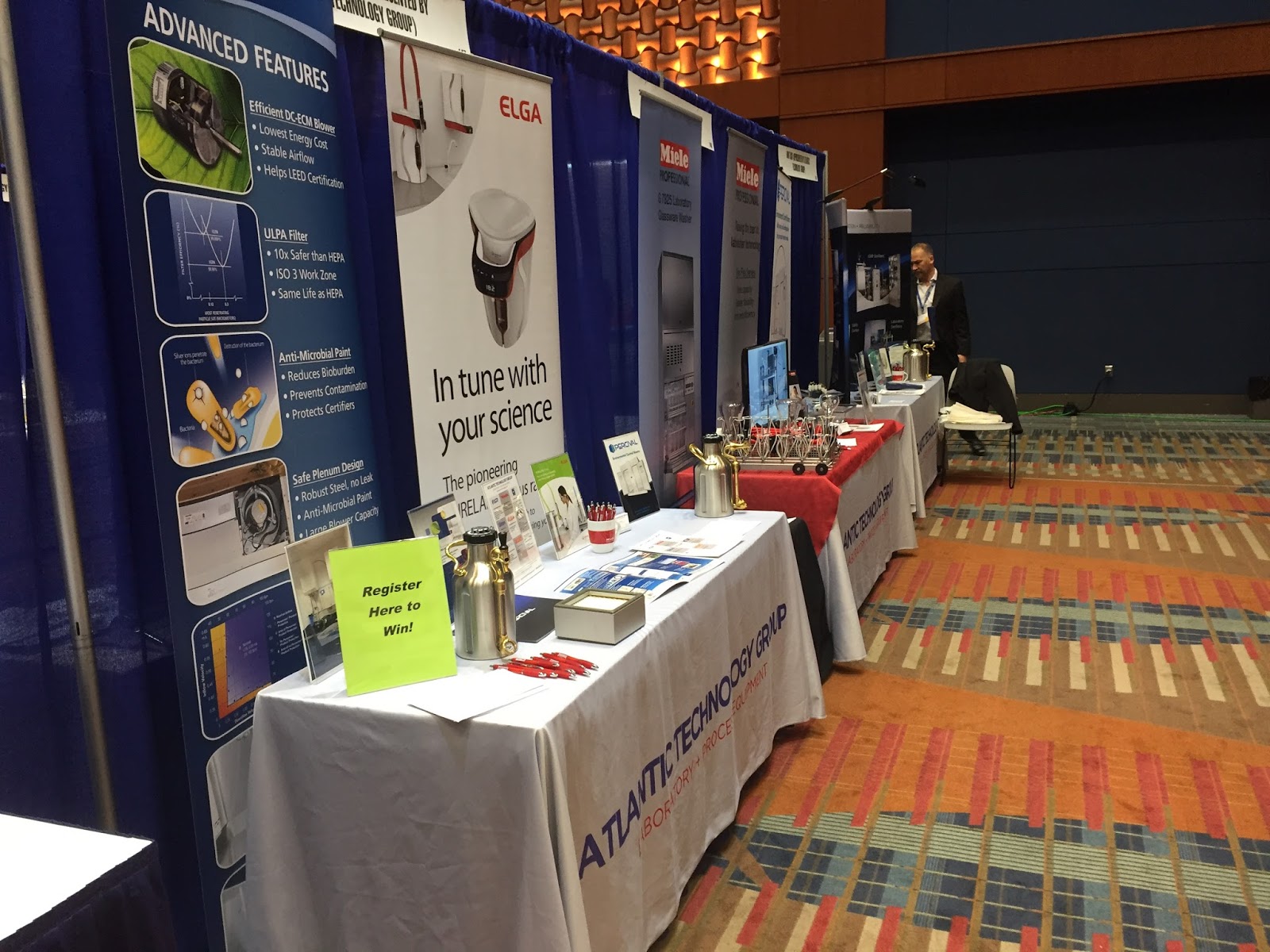
Atlantic Technology Group at ISPE-CaSA 2018

Atlantic Technology Group exhibit display at ISPE CASA 2018
Atlantic Technology Group exhibiting at ISPE CaSA 2018
Atlantic Technology Group attended, supported and exhibited at the 25th Annual ISPE-CaSA Life Sciences and Technology Conference at the Raleigh Convention Center on March 13, 2018. The conference provided everyone with great opportunities to network, socialize, learn, and discuss application and processing challenges with the life science industry. Many stopped by ATG's multi-space display to inquire about products and look for solutions. On display were products from several manufacturers represented by ATG in the mid-Atlantic area.

  • Miele - Large Chamber and Undercounter Laboratory Glassware Washers, Parts Washers, Critical Laundry Washers and Dryers, Specialty Cleaning and Neutralization Agents
  • BMT USA - Laboratory Sterilizers, Bulk Sterilizers, Custom Sterilizers, cGMP Terminal Sterilizers including Vacuum, Steam-Air Mixture, and Water Spray; Clean Steam Generators, Pure Steam Generators
  • Elga - Type 1, Type 2, Type 3 Water Systems; RO, DI, EDI, UV, and Ultrafiltration technologies in compact lab systems to large high-flow whole building loop systems.
  • Esco - Biological Safety Cabinets, Horizontal Laminar Flow Clean Benches, Vertical Laminar Flow Clean Benches, Animal Containment Work Stations, PCR Cabinets, Powder Weighing Balance Enclosures, Compounding Pharmacy Isolators, Ductless Fume Hoods, Ducted Fume Hoods, CO2 Incubators
  • Percival Scientific - Plant Growth and Stability Chambers, Walk-in Controlled Environment Rooms
Thanks go out to all attendees and other participants for a successful conference from the solution providers at Atlantic Technology Group. We look forward to next year's conference and any opportunity to assist a customer in solving a problem, meeting a challenge.

Wednesday, March 14, 2018

Animal Cage Washer Installation Considerations

laboratory animal cage and rack washer
Laboratory animal cage washing equipment presents
a number of challenges for successful installation.
Image courtesy Girton Mfg.
Laboratory animal cage and rack washers are major equipment items in the facilities where they are installed. A successful installation that enables the washer to provide rated performance for a long service life requires consideration of a host of items.

Size and Weight - These machines are large, by any measure. They are very heavy and often require special equipment and trained riggers to get them into place. Moving the washer across existing floor surfaces, because of the weight of the machine, can cause damage if not done properly. It is also necessary to plan a route from the point of unloading to the point of installation. Clear access for machine sections and any required transporting gear is needed. It may be necessary, and is often possible, to have a machine fabricated in sections that make transport through the building easier.

Material - Washing machines are fabricated of stainless steel, making them potential destroyers of almost any finished surface in a building along the transport path. It may be prudent to install protective coverings over finished surfaces during transport of the equipment from unloading area to installation space.

Utility Requirements - Laboratory animal cage washers are intended to disinfect the wash load, with carefully designed processing protocols to assure consistent levels of quality. This requires the attainment of minimum wash and rinse temperatures, along with the normal operation of every component of the machine. There are pumps, motors, air driven components, valves and a whole range of other components. Utility requirements for steam, water, electricity, compressed air, drain and possibly other services must be carefully coordinated with services available in the facility. The recommended capacity and other characteristics for each service will be clearly stated on approval documents and should be adhered to, without compromise.

Service Access - Cage and rack washers are heavy duty equipment with many mechanical parts. Service and maintenance is required on a regular basis to keep the washer in good operating order. Make sure the installation space is not too tight. Allow access for a service technician to work safely and effectively. The manufacturer, as well as the facilities manager, can provide guidance on minimum service access clearances.

Structural Requirements - There are several installation schemes for cage and rack washers. One involves recessing the washer in the floor to provide a level loading and unloading path. A pass-thru washer will require a barrier wall to separate the load and unload areas. The weight of the machine must be accommodated by the building structure at the installation site. Dimensions for a recessed installation area, or pit, need to be coordinated closely between machine manufacturer and construction trades.

Much of what is outlined here is applicable to cabinet type and tunnel washers, too. Share your plans with a washing equipment specialist for assistance in attaining a successful outcome.

Sunday, February 25, 2018

Modular Barrier Walls

modular barrier wall in bioprocessing sterilization facility
Modular barrier walls installed in a bioprocessing facility.
Image courtesy Avant Garde Scientific
Modular walls, specially designed to provide positive sealing between surrounding structures and equipment, can provide an effective isolation barrier between processing areas with differing classifications. Laboratory animal care and bioprocessing operations are but two examples of many potential applications for modular walls.

A common application that illustrates the function of modular isolating walls is an animal cage washing facility. The modular wall forms a sealed barrier, isolating the entry side of washing equipment from the discharge side. The entry side is commonly called the dirty side, since items entering that area are destined to be cleaned. The exit side is known as the clean side. It is good practice to not only install a physical barrier between the two sides, but also to establish procedures to assure that personnel, carts, or other equipment does not transit from dirty to clean side without first being properly cleaned or decontaminated.

For an effective installation, the walls and any washing, sterilizing, or other processing equipment must be coordinated and mated with the wall system to provide an impenetrable seal. The proper sealing disallows passage of fluids, even air and vapor, from the dirty side to the clean side. The role of the barrier wall is to fill in all the gaps between the machinery and the building features, providing the positive seal and barrier that is needed.

The type of service and operation anticipated for the areas where barrier walls will be installed determines the requirements for materials of construction. Gaskets, fasteners and surface materials need to withstand repeated exposure to cleaning and sanitizing agents, steam, waste materials or dirt from any entering materials. Wall surfaces and supporting structure should be of a material that can withstand potential impact of heavy wheeled carts or other potentially damaging items.

Modular barrier walls can often be easily modified to accommodate the addition of new penetrations through the wall by equipment or piping. Share your potential challenges with product specialists, and leverage your own knowledge and experience with their product application expertise to develop an effective solution.
Saturday, February 17, 2018

Good Practice Reminders for Biological Safety Cabinets


Biological safety cabinets are utilized throughout the life sciences to provide a suitable workstation for technicians handling a range of potentially pathogenic agents. They also protect the work area from contamination by air from the surrounding area in the lab. There are some basic techniques and practices that should be followed in the placement, installation and use of biological safety cabinets. The video from Esco, a prominent global manufacturer of biological safety cabinets, provides a quick synopsis of the basic and essential guidelines for biological safety cabinet installation and use.

Share any concerns, questions, or challenges you may have with your current or planned life science lab equipment with experienced lab equipment specialists. Leverage your own knowledge and experience with their expertise to develop effective solutions.

Sunday, February 11, 2018

Humidification Methods for Environmental Chambers

interior of biological environmental chamber with shelves and lighting
Environmental chambers for insect and plant research
are common applications requiring humidity control.\
Image courtesy Percival Scientific
Many environmental chambers utilized in research or production applications have a requirement to maintain a specified moisture level in the controlled space. Most often, the moisture level is specified as relative humidity. Some moisture levels may require the removal of moisture from the space, but the focus of this article is those instances where moisture must be added to the air in order to maintain the setpoint.

In designing a humidified environmental chamber, or specifying one for your own application, the challenge is to add moisture to the air in a fashion that does not result in detrimental effects on the contained materials or work. Additionally, the humidification system operation must work in concert with, not adversely to, other elements of the system that are tasked with maintaining other environmental conditions, such as temperature. With some awareness of the various methods available for humidification and their potential impact on your work and your budget, you will be better positioned to make an informed selection and achieve your desired outcome.

Several humidification methods are widely available for commercial use, all of which result in the same thing; adding water vapor to the air in the controlled space.

  • Steam introduction directly into the space: This direct addition of water vapor using low pressure steam should only be used when the sourced steam is positively known to be suitable for introduction into an occupied space. Any treatment chemicals used for efficient boiler and steam system operation could possibly travel with the steam into the controlled space. If the steam is clean, the main concerns are potential heating of the air by the sensible heat of the steam and the reliability of the steam source. An advantage of this method is that it is very rapid in response to a control signal. The hardware to regulate and control the steam injection can be costly, and present a challenge to some service techs.
  • Passive evaporating of water using the chamber air: Water will evaporate into air at differing rates under differing conditions. Directing a flow of air from the space over a water surface or falling stream of water will result in some degree of evaporation, with a corresponding increase in relative humidity. These systems come in many configurations designed to fulfill a range of requirements and available installation space, some with heating of the water to increase the evaporation rate. They are inexpensive and slow to respond. A major issue for some applications is the tendency for the water sitting in the evaporating pan to harbor biological contaminants. Frequent cleaning is a characteristic maintenance item for these systems. Cleaning reduces contamination levels and also removes the accumulated mineral deposits and other debris left behind by the evaporating water. This method of moisture addition will result in a small amount chamber air cooling.
  • Evaporating water using electric heat - This humidifier is similar to the passive evaporating method just described, but with the addition of a controlled heating system that can increase the evaporation rate. Consisting essentially of electric heaters immersed in water contained in a comparatively compact unit, these humidifiers can be selected to deliver very large amounts of vapor from a small package. The electric heat is the primary driver of evaporation. Heat applied to the water can be regulated in very fine increments to provide accurate humidity control, with little excursion from the setpoint. It is not uncommon for these units to boil the water contained in the unit, so one concern is the amount of sensible heat that is delivered with the water vapor and its potential impact on room temperature. Cost is moderate. Maintenance levels are low, but a treated water supply is recommended to minimize scale formation. Biological contamination is of little concern with these units due to the temperature at which they operate. Several configurations of this type of humidifier allow for a broad choice of installation options.
  • Evaporating water using steam - With essentially the same operation as described above for the electrically heated unit, a steam heated humidifier utilizes steam as the heat source. Precise control of a steam supply is generally more difficult and expensive than a comparable capacity electric heating system. These systems are generally available as larger capacity units.
  • Water dispersion devices - Several technologies are utilized to increase the surface area of a water supply and disperse it into the controlled space where it is evaporated by the air. Simple and inexpensive centrifugal atomizers create fog of tiny water droplets that evaporate as they contact the chamber air. Other devices employ compressed air and specialized spray nozzles to create very small water droplets that produce a similar result. Ultrasonic transducers aer also employed to atomize water into a fine mist. Centrifugal atomizers are probably the least expensive option, but may not provide the level of control accuracy needed, since they are not well suited to rapid on/off cycling. Ultrasonic transducers and spray nozzles can be sized or configured to provide better levels of output modulation, but come with a higher cost. Maintenance requirements for water dispersion devices should be considered. Another consideration for this type of humidification is water supply quality. Liquid water is dispersed in the air, then evaporated. Anything contained within the water droplet that is not water will be liberated in the controlled space. Over time, particulates and once dissolved minerals can accumulate on environmental chamber surfaces and require cleaning and removal.
There are many facets of humidification to consider for an environmental chamber or room. The less expensive first cost option may not be the best overall selection. Share your requirements with an environmental chamber specialist and leverage your own knowledge and experience with their application expertise to develop an effective solution.


Monday, February 5, 2018

Pharmacy Refrigerators

pharmacy refrigerators with glass door
Three of several models configured for use in
pharmacy applications.
Image courtesy Powers Scientific
Refrigerators designated as storage locations for pharmaceuticals requiring cold storage are often called pharmacy refrigerators. They, of course, can be found in pharmacies, but also any other locations that store or dispense the agents requiring refrigeration. There are various requirements that can apply to these specialized refrigeration units to assure compliance with applicable standards and regulations. Other features may be incorporated for quality assurance or operational procedure enhancement.

  • Glass doors can reduce the exposure of the stored product to warm air inflow resulting from door openings by allowing visual access to the refrigerator contents.
  • Some units may have more precise temperature control devices than would be found on refrigerators intended for other uses.
  • An easily readable temperature display allows technicians to visually verify chamber conditions.
  • Temperature activated alarms automatically alert when chamber temperature approaches unacceptable levels.
  • Remote signalling of chamber temperature or alarm occurrence can be useful if the refrigerator is located in an area that is unattended.
  • On board data logging of chamber temperature can be used to produce time based records of chamber temperature.
The pharmacy refrigerators are available in a range of sizes, with a host of interior options that enable inventory arrangement to suit each operation. Share your scientific, laboratory, and biological refrigeration requirements with experienced lab equipment professionals. Leverage your own knowledge and experience with their product application expertise to develop and effective solution.

Monday, January 29, 2018

A Few Things to Know About Steam Utilization Equipment in Laboratories

gas boilers in boiler room
Steam is a necessary utility for some types of laboratory
equipment.
Steam, essentially boiled and vaporized water, is in broad use throughout industrial, commercial and residential settings. The use of steam as a heat transfer medium or motive force is as old as the industrial revolution, maybe older. Even with the maturity of its use, new and innovative ways are still being sought and developed to better produce and utilize steam in modern facilities.

One reason for the staying power of steam throughout modern history is its very effective performance as a heat transfer medium. A comparatively large amount of heat can be liberated by condensing one pound of steam vapor into liquid water. Steam is not flammable or toxic, and can be produced at a centralized location and distributed effectively to utilization points throughout a large facility using a piping system. If you live or work in a large building in a location that experiences cold winter temperatures, chances are good that it is heated using steam.

There are a number of common laboratory equipment items that utilize steam as a heat source. Often, the steam is provided from a central plant, and the equipment operator has little to do with steam production. In other cases, a small steam generator may be the dedicated steam source for the equipment. In this case, the operator should recognize that the steam generator is an equipment item that requires regular scheduled maintenance in order to keep producing steam at the rated capacity. Additionally, there are some safety concerns of which operators should be aware. All of these items will be clearly depicted in the owner's manual for the equipment. If no owner's manual can be located, contact the steam generator manufacturer and obtain a copy.

The lab equipment that utilizes steam will often be characterized by a large heat requirement in their operation. Common examples are sterilizers, washing equipment, water distillers, and some types of drying ovens. Small versions of these equipment items may be heated electrically, but larger versions will often employ steam because of its efficiency as a heat source.

Lab planning includes an assessment of the utilities required to properly operate equipment contemplated for each space. Specific connection points for washing, sterilizing, and other steam utilization equipment will identify connection sizes for steam, as well as minimum pressure requirement, maximum allowable connected pressure. An additional requirement for steam flow, expressed as mass per unit of time (lbs/hr in the US) is essential in making sure the steam source to the equipment provides adequate capacity.

Share your lab equipment requirements and plans with a lab equipment planning specialist. Leverage your own knowledge and experience with their expertise to develop an effective solution.

Sunday, January 21, 2018

Keep Up To Date With Lab Equipment Service Requirements

laboratory equipment and glassware
Every laboratory will have its own unique set of
maintenance, service and calibration requirements.
Laboratory techniques and operations are based upon standards, requirements that certain conditions be maintained or achieved, in order to support the validity of the work done and assure measures of quality are attained. Everything utilized in a lab process can have an impact on the outcome, or output. It is important to properly maintain instruments and equipment, so that their operation remains within the required or expected range.

Labs commonly have an extensive array of equipment, some used regularly, some infrequently. Keeping up with the calibration, certification, service, cleaning, and maintenance of all that equipment requires diligence and commitment. Even though equipment may be operating, that is no assurance that the performance of the instrument or machine is at a level adequate for whatever task is to be done. Running or using your gear until it breaks down should not be part of your maintenance and service scheduling plan.

Some equipment, such as a cold room or labware washer, can be quite forgiving of your neglect. They will, though, stop working at some point unless given at least minimal attention. Other equipment items, a biological safety cabinet being an example, provide levels of operator safety. Their service schedule requirements are stringent.

In every case, neglecting the recommended or required scheduled service is akin to gambling. The potential for equipment breakdown or improper operation increases as the level or care and maintenance falls below the minimum requirement. The increased degree of risk may initially be very small, but can increase quickly with continued neglect.

Keeping everything up to date is a challenge. Your commitment can start with some simple organizational steps.

  • Systematically assemble the care and maintenance requirements for every item of equipment. Having all the information in a single place can be helpful.
  • Determine what service tasks are appropriate for the lab staff. Some maintenance items are simple and can be easily accomplished by the people working in the lab. 
  • What tasks require special tools or equipment not on hand? These operations will require outsourcing or acquisition of needed tools and training for inhouse technicians.
  • If outside resources are needed for tasks, assemble information on the vendors or sources of what is needed.
  • Develop a master schedule, using a tool that supports any required record keeping and other tasks associated with getting the service done on a continuing basis. This is a task ripe for automation, saving human resources for use in accomplishing the real mission of the lab.
It may be advantageous to outsource all, or at least a large amount, of the responsibility for service, calibration, and maintenance to a qualified vendor. This would reduce the work burden on the lab staff to that of supervision and coordination. Reducing the number of different vendors entering the lab space and the frequency of service visits could also be accomplished by consolidating the work under a single or small number of vendors.

Share your laboratory equipment challenges with experienced professionals, leveraging your own knowledge and experience with their expertise to develop an effective solution.

Wednesday, January 10, 2018

Ductless Fume Hoods Chemical Guide

ductless fume hood for laboratory use
Ductless fume hood for laboratory use
Image courtesy Esco
Ductless fume hoods for laboratory use employ filtration to capture chemical fumes and vapors, providing a safe and effective means of protecting lab techs from harmful exposure. The environmental and cost benefits of the systems are substantial when compared to exhaust type fume removal methods. Ductless fume hoods purify and recirculate air back into the lab space, negating the need to deliver large volumes of conditioned make-up air to the space.

 While a ductless fume hood will not be suitable for every chemical lab operation, the range of applications where a filtration and recirculation solution can provide a safe and effective alternative are extensive.

  • Common laboratory chemicals, especially organic.
  • Sulphur dioxide or hydrofluoric acid fumes. Organic and inorganic acid vapors and fumes.
  • Mercury vapor and compounds.
  • Sulphur compounds.
  • Halogen compounds like chlorine, fluorine, iodine, bromine, etc.
  • Formaldehyde.
  • Ammonia and amines.
Extensive data is available on the use of various chemical compounds with ductless fume hoods. Share your application challenge with a product specialist for the best recommendation.

Friday, January 5, 2018

Esco CO2 Incubator Common Features For Ease of Use


Esco manufactures several versions of CO2 incubators for laboratory use, each with a targeted range of specialized applications. The video provides an overview of the features common to all Esco CO2 incubators that contribute to their efficient use in a lab setting.

More information about applications and products is available from lab equipment specialists. Leverage your own knowledge and experience with their product knowledge and application expertise to make effective equipment selection decisions.

Friday, December 15, 2017

Taking Care of Your Environmental Chamber

plant growth chamber environmental chamber with red LED lighting
Maintaining the condition of your environmental chamber
is essential to keeping it performing like new.
Image courtesy Percival Scientific
When your new environmental chamber or incubator arrives, fresh off the pallet, everything about the equipment is in top shape. Over time, through normal use, there are aspects of the equipment that can become worn, dirty, or otherwise compromised. This normal wear and tear, if left unchecked, can impede the proper operation of your chamber and cause its performance to deteriorate.

Percival Scientific, globally recognized manufacturer of plant growth chambers and other environmentally controlled chambers and rooms, posted a blog with some general recommendations that users can employ to make sure their equipment stays in good working order. You can read the full article, or a synopsis with key items provided below.

  • Air cooled condensing units must have sufficient air movement across their condenser surface in order to function properly. As dust accumulates on the condenser, the chamber's ability to cool is compromised. You may need to use a small ladder of step stool to get access for inspection and cleaning. Use a vacuum to remove accumulated dust, not compressed air. The air quality at the chamber installation site will determine how often this inspection and cleaning should be performed. 
  • Perform a similar check at the evaporator, the cooling coil inside the chamber. The requirements are the same. Remove accumulated dust with a vacuum.
  • Chambers with cooling systems will have a condensate drain pan and a drain tube below the evaporator coil. Over time, dust and dirt (sometimes debris) can accumulate in the pan or restrict flow through the drain tube. Periodic flushing with warm soapy water will help keep the line and pan clean and clear.
  • Various surfaces within the chamber will benefit from regular cleaning. This will help retard corrosion, accumulation of dirt, and growth of unwanted mold, etc.
There are more regular maintenance details, depending upon the features of the environmental chamber. Many users, already burdened by the time demands of their work, contract with outside parties to perform regular cleaning, checking, and calibration. Whatever your system of performing regular preventive maintenance, keep it in place and working to maintain the chamber performance you expect.

Share your environmental chamber questions, concerns, and challenges of all types with the equipment specialists at Atlantic Technology Group. Their expertise will leverage your knowledge and experience into effective solutions.

Saturday, December 9, 2017

Cleaning and Neutralizing Agents for Lab Washing

laboratory glassware washing chemicals cleaning and neutralizing
Laboratory glassware cleaning and neutralizing agents
Image courtesy Miele Professional
Using good chemicals in lab washing operations is as important as using a good machine. Miele Professional, under the ProCare brand, offers a specially formulated line of cleaning and neutralizing agents crafted to maximize the effectiveness of machine washing.

Cleaning agents are available in alkaline or mild alkaline versions to match the level and type of load soiling. Liquid and powdered versions allow for dispensing by your preferred method.

Neutralizing agents are acidic in nature, used as a pre-cleaning treatment or neutralizer of alkaline residues left from the primary wash portion of the cleaning cycle. Two versions, based on differing acidic agents, cover the majority of neutralizing requirements.

Matching your wash chemicals to the load requirements will yield the best results. Share your lab utensil and glassware washing challenges with lab equipment experts, combining your own knowledge and experience with their product application expertise to develop the best solution.


Monday, December 4, 2017

Horizontal Laminar Flow Clean Benches

horizontal laminar flow clean bench with glass sides
This horizontal laminar flow clean bench is
free standing and has glass sides to the work zone.
Image courtesy Esco
Processes and operations that require technicians to perform hands-on tasks without contaminating their work are often performed in a horizontal laminar flow work station or clean bench. With filtered air flowing horizontally from the rear of the work area and through the open front, these stations provide a level of protection against infiltration of contaminants from the surrounding space.

Some features common to horizontal laminar flow clean benches:

  • Large open area into the work zone with no obstruction.
  • HEPA filtered air in work zone. 
  • Horizontal laminar air flow pattern prevents entry of dust and contamination from surrounding space.
  • Work area surfaces suitable for cleaning with sanitizing agents.
  • Bench mounted or provided with integral floor stand.
Esco manufactures the Airstream® line of horizontal and vertical laminar flow clean benches targeted for laboratory use. The various models include a host of features tailored to laboratory use. More information is available in the document below, and share your clean work station requirements with lab equipment specialists. The combination of your own experience an knowledge with their product application expertise will yield a positive solution.


Wednesday, November 15, 2017

Water Purification Knowledge for Laboratory Applications

laboratory water purification unit with dispensing user
Specifying lab water purity requirements based on
application and matching water purification equipment
to the requirements delivers a cost effective solution.
Image courtesy ELGA
Purified water is essential to a broad range of laboratory operations. Creating a match between the lab process requirements for purity and quantity with the performance ratings of water purification equipment can be challenging. The time spent creating a solid plan will pay dividends for the life of the equipment selected.

ELGA, a member of Veolia Water Technologies, focuses on the treatment of water for laboratory use. They have condensed the subject of laboratory water purification into a modest sized document that covers several facets to be considered when planning a lab water system.

  • Why water purity is important for every lab application
  • The things you need to know about water impurities
  • Water purification technologies available
  • Matching the water purity standard or specification for your application
  • Practical considerations for installing a water purification system
  • The future of water purification in the lab
The full document is available upon request. Share your water purification requirements and challenges with application experts. Leverage your own knowledge and experience with their product application expertise and develop an effective solution.

Thursday, November 9, 2017

Two Key Recommendations for Purifying Your Laboratory Water

laboratory water purification equipment point of use station with technician drawing sample
Assessing the demand for various grades of purified
water in the laboratory can lead to a cost effective approach
to equipment specification and purchase.
Image courtesy Elga
In this post we share the expertise and knowledge of a globally recognized leader in water purification for laboratory and process applications. Elga Lab Water has been delivering cost effective solutions for converting all types of source water into various purified grades for research and industrial use. Below, with only minor editing to accommodate this publishing format, is a short article published by the editorial staff at Elga. It provides the two most basic, and most important, recommendations for consideration in selecting a water purification system for your lab.

From the Elga staff....
The water in your tap has already gone through several purification steps to keep you safe and yet it still contains all sorts of impurities like microorganisms, salts (the reason why you would get electrocuted if you dropped a hair drier in the bathtub) and organic compounds. Suddenly, water that’s pure enough to drink might not be quite as pure as you thought.

In the lab, water is perhaps your most important reagent (and its position as the universal solvent means that it is probably also a component of many other reagents you use). Impurities, on the other hand, are usually your enemy. You should be using different levels of purity for different applications, to avoid problems caused by contaminants (all while minimizing financial cost). Pre-treating water is a great way to obtain a lot of water sufficient for a wide range of low-purity applications, and you can use this water in further steps of purification for those applications that are more demanding. The type of purity required depends on the application the water is for, and you can save money by making sure you chose the right type. Read on to find out more about these two cost-saving tactics.

Recommendation 1: Pretreat your water to cut down costs

Let’s assume your water has made it to the tap. It’s come out of the ocean or Earth’s deep underground storage, through modern water treatment works and into the pipes. You could take small amounts of this and purify it to high levels, but a more economical and efficient option is to start with pretreatment, which takes large quantities of water to a level of purity that is already appropriate for some uses, like preparing cleaning reagents. This allows you to take advantage of economies of scale and prevents you from using more expensive water for rudimentary applications such as cleaning. You can then use this water as a precursor for higher levels of purification. To pretreat water, you pass large volumes through compressed fibers that filter out particles of a nominal size. Activated carbon (AC) is relatively cheap (you’ll see it in many hikers’ backpacks these days for emergencies) and you can use this to remove chlorine, chloramine and organics.

Recommendation 2: Choose a water treatment option based on your needs

After pretreating your water, you have several options for removing different impurities. Which one you choose should depend on the type of experiment you plan to carry out:
  • Reverse osmosis (RO) – uses semi-permeable membranes to typically remove over 95% of ionic and organic contaminants. Dissolved gases are not removed. 
  • Ion exchange (IX) – cartridges or cylinders containing resin with small porous beads. They need regular replacement but are relatively cheap. Other contaminants such as bacteria remain. 
  • Electrodeionization – combines features of RO and IX. 
  • Filtration – finer filters than those used for pretreatment. Removes colloids, bacteria and particulates and with the finest filters can remove nucleases, endotoxins and organics. 
  • Ultraviolet (UV) 
  • Distillation – removes contaminants that don’t evaporate with water. 
  • Degassing – uses a hydrophobic membrane and a vacuum or flush gas to remove gases such as CO2 and O2. 
  • Vent filters – can be fitted to reservoir to prevent contaminants entering stored water. 
Designing a cost effective water purification equipment system can be challenging. Share your requirements with a water purification specialist, leveraging your own knowledge and experience with their product application expertise to develop the best solution.

Friday, November 3, 2017

Vacuum Ovens

vacuum oven
Vacuum oven chamber is upper portion, with controls
on top and vacuum station below.
Image courtesy BMT USA
Drying, the removal of moisture or a solvent from a solid material, is a common process throughout research and production operations. The myriad applications each have the same purpose, but may need to employ differing means to accomplish their goal.

There are some instances where a combination of heat and reduced pressure can produce the best results. A vacuum oven enables the reduction of the atmospheric pressure within the enclosed chamber, while at the same time applying heat to the subject material. Reduced pressure lowers the temperature at which a liquid will vaporize. Heat provides energy needed for the vaporization of water or solvents contained with the subject material. Chamber pressure reduction is accomplished with a vacuum pump that is equipped or otherwise suitable for use with whatever vapors may emanate from the chamber. In some cases, the removal of air from the chamber is also beneficial because it inhibits oxidation of the drying material during the drying process.

A well configured vacuum oven will have easy to use controls for temperature and vacuum system operation. The manner in which the chamber interior is configured to enhance conduction of heat into the processed material is also important. Vacuum systems can be separate, or integrated as part of a complete vacuum oven system.

For more information, share your drying application challenges with laboratory equipment specialists, leveraging your own knowledge and experience with their product application expertise to develop an effective solution.


Monday, October 30, 2017

Laboratory Steam Sterilizers

laboratory steam sterilizer
Sterivap laboratory steam sterilizers suit a full range of
laboratory applications.
Image courtesy BMT
The sterilization process is an essential part of laboratory operations, assuring  safety and quality of the work that is done. Though the sterilization cycle is simple to describe, the criticality of the process calls for the use of numerous features in sterilization equipment, to assure successful completion of each and every cycle.

BMT USA incorporates a host of important performance features in it Sterivap series of laboratory steam sterilizers.
  • Dual microprocessor controls with separate instrumentation for maximum load safety
  • Color touch screen operator interface
  • 316L Stainless steel chamber and 316Ti jacket with 15 year non-prorated warranty
  • Hinged fascia panels with key lock for ease in maintenance access
  • Mechanical vacuum pump for consistent vacuum performance
  • Water conservation for up to 75% reduced water consumption
  • Space saving design-less floor space required
  • Automatic Motor driven precision sliding doors
  • High grade non-proprietary components
  • Double pressure sensors ensure no pressure inside the chamber before unlocking of doors can occur.
More detail is provided below. Share your laboratory and process sterilization challenges with application specialists, combining your own knowledge and experience with their product application expertise to develop an effective solution.


Tuesday, October 17, 2017

Compounding Station for Non-Sterile Drugs

non sterile drug compounding isolator station
Economical compounding station provides
worker protection
Image courtesy Esco
Non-sterile drug compounding, with the absence of a need to isolate the pharmaceutical compound from the surrounding environment, presents potential hazards to technicians through exposure to airborne portions of the chemicals being processed.

Esco provides an economical solution, providing adequate operator protection for operations complying with USP 800 for non-sterile hazardous drug compounding. The Powdermax™ Powder Weighing Balance Enclosure delivers a workspace for compounding while providing operator protection from hazardous drug powders.

More detail is provided in the datasheet included below. Share your sterile and non-sterile isolation requirements with lab equipment experts. Leverage your own knowledge and experience with their lab equipment application expertise to develop an effective solution.